One question, an answer with its sources.
Ask in plain language across your ledger and your documents at once. The answer opens with a single sentence you could repeat in a meeting, and every claim under it carries the passage it came from.
Nothing reaches your books without a person confirming it, and nothing is reported without the passage behind it. Every surface below enforces that the same way.
None of these is a technology problem, which is why more automation has not fixed them. Each one is a place where the honest answer is harder to render than the confident one.
Your ledger says one thing and the documents behind it say another. The difference is not an error to suppress: it is the finding, and most tools reconcile it away before anyone sees it.
A contract that is silent on notice, an invoice with no purchase order, a vendor with nothing on file. Every one of those is information, and every one of them arrives as an empty cell that looks identical to a cell nobody checked.
One is arithmetic you can re-run. The other is a sentence someone wrote in a document. Reporting them with the same confidence is how a close becomes undefendable six months later.
Whether a $600 laptop is capex. What counts as a material variance. These live in a policy PDF, three inboxes and one person's memory, and they are overridden more often than they are applied.
Ask in plain language across your ledger and your documents at once. The answer opens with a single sentence you could repeat in a meeting, and every claim under it carries the passage it came from.
Put a question to every document in the workspace and get one cell per answer. Every cell opens to the passage it was read from, and a document that does not answer is marked Not stated, with the number of passages read, rather than left blank. A cell you have checked can be locked, so a later run never changes it.
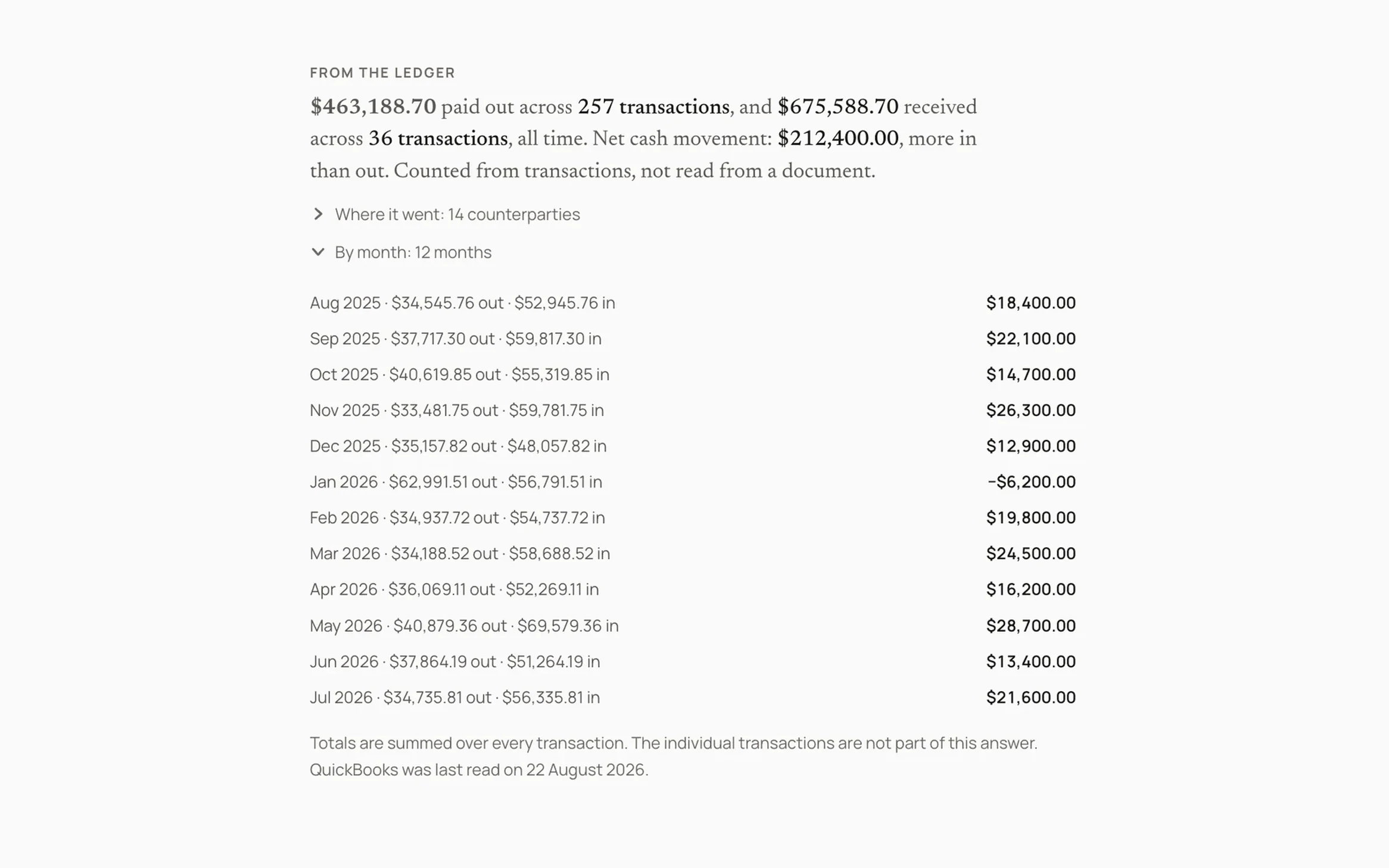
Coset reads your QuickBooks ledger directly. When a question needs a total, the database counts it across every transaction, and the answer says so: how many transactions, which months, and when the books were last read.
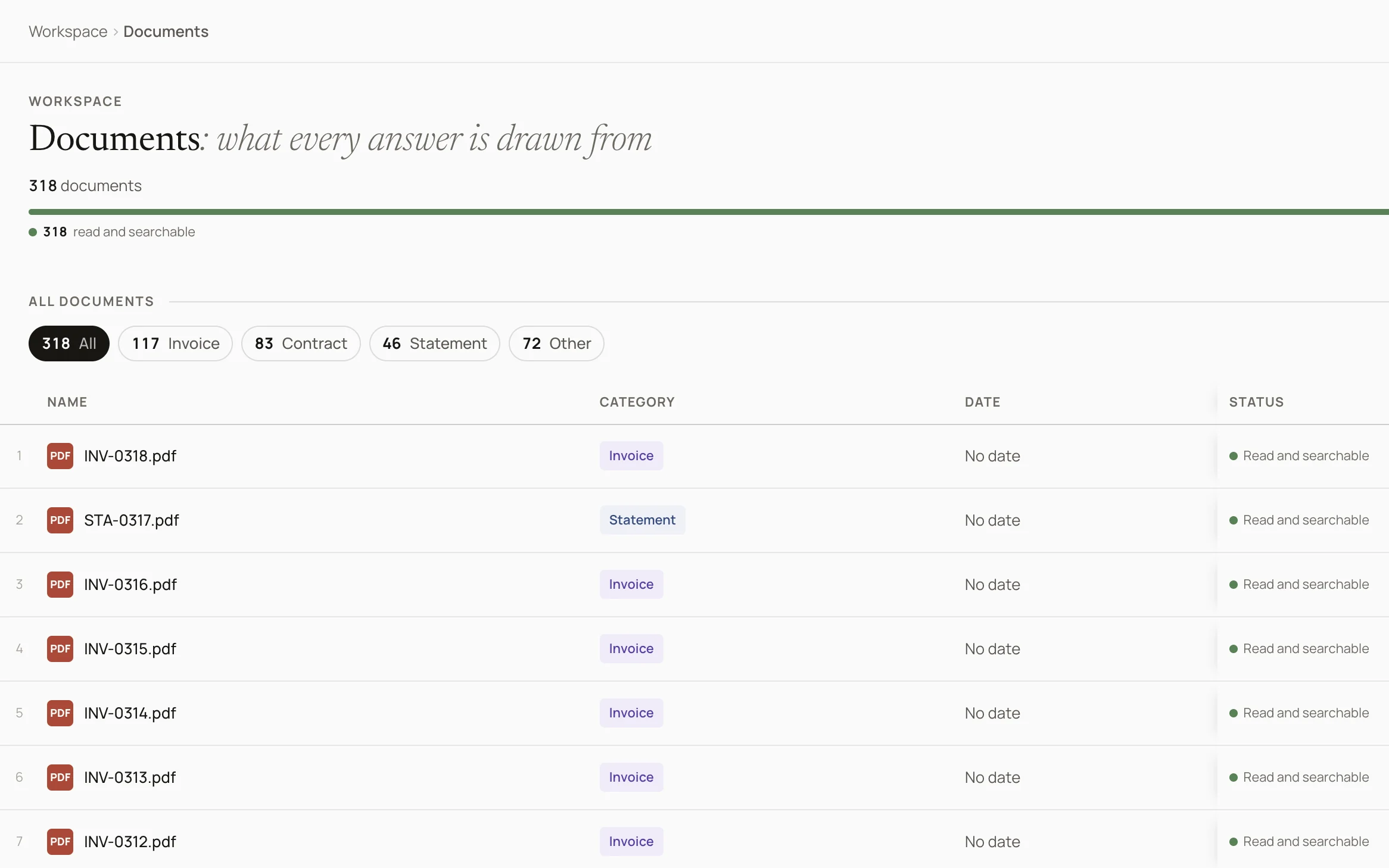
Upload contracts, invoices, statements and leases. Coset sorts each one by type, reads it in full and shows how many are ready, so you know exactly what an answer can draw on.
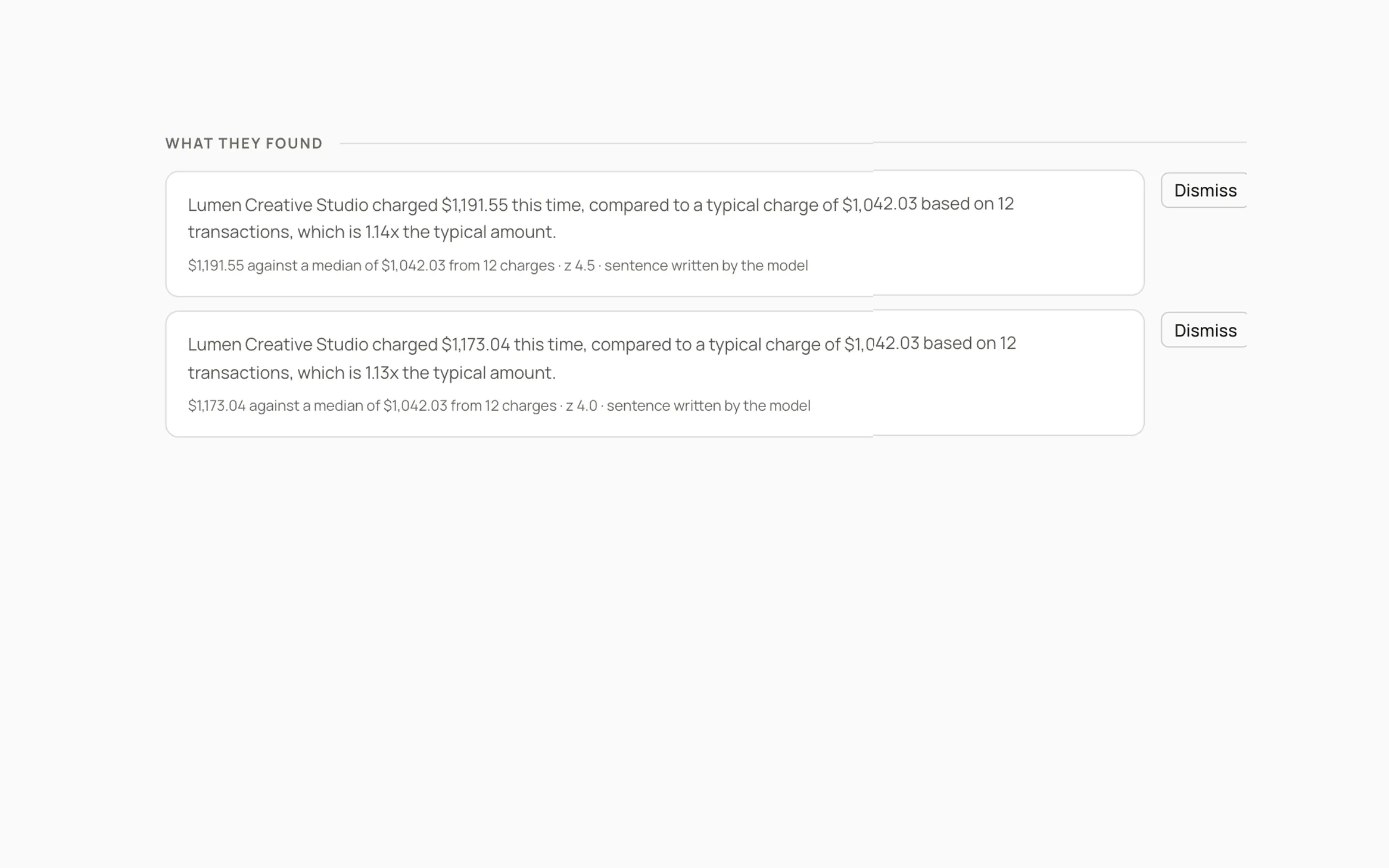
Detectors look for contradicted rules, unusual amounts and possible duplicates. Each finding states what it was compared against, such as a charge against the median of that merchant's own history, and waits for you to keep or dismiss it. They run when you ask, and a clean result is shown as checked rather than left blank.
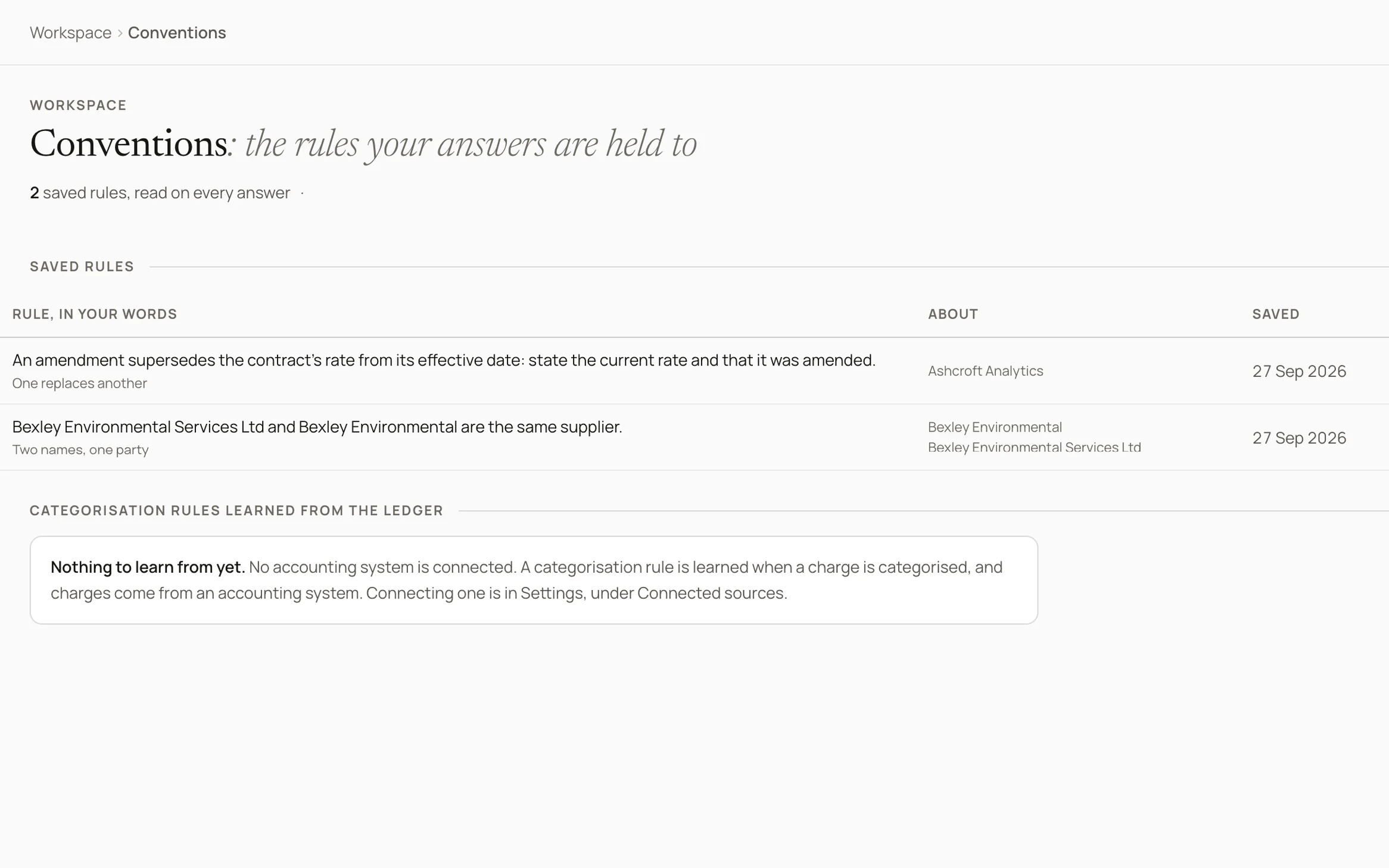
Save a rule in plain words, such as two supplier names being one party or an amendment replacing a contract's rate, and every answer after that is held to it. Each rule shows what it covers, when it was saved and where it came from, and can be revoked at any time.